Highlighting Public Misperceptions in Joint Forest Fire Management with Japan
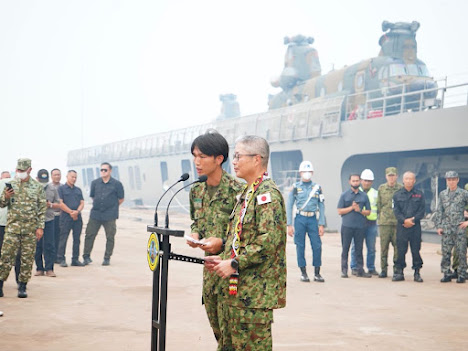
Public debate surrounding the management of forest and land fires (karhutla) in Kalimantan has re-emerged alongside criticisms over the ceremonial reception of disaster response teams and technical assistance elements from Japan. The prevailing narrative across several media outlets tends to frame foreign support through a narrow lens—questioning national sovereignty and labeling protocolary appreciation as an overreaction. However, a mindset that reduces international humanitarian assistance to a “sovereignty threat” represents a simplification that ultimately undermines the broader public interest.
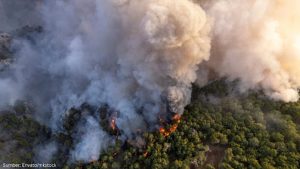
Forest fires are not merely local crises; they constitute transboundary ecological threats that test a nation’s disaster governance capacity. Under international law and the framework of Humanitarian Assistance and Disaster Relief (HADR), engaging foreign technical expertise and defense assets for non-war operations is a legitimate and protected customary international practice. The UN Oslo Guidelines explicitly state that foreign defense assets deployed for disaster response operate under the full mandate and civilian control of the host nation.
Viewing the arrival of technical disaster relief teams from partner nations like Japan as a sign of “weakened self-reliance” is a methodologically flawed premise. In an era of global interdependence, mature sovereignty is demonstrated precisely by a state’s ability to orchestrate international collaboration effectively, transparently, and measurably to safeguard its citizens and ecosystems.
Forest fires represent transboundary environmental issues. Facing a global climate crisis, no single nation can operate in isolation without technological collaboration, aerial logistical capacity (water bombing), and technical expertise from international partners.
Protocolary Significance: Accountability and Diplomatic Courtesy
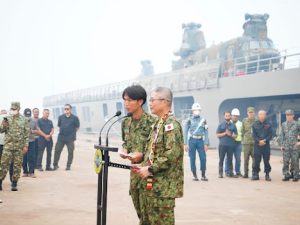
Critical scrutiny directed at the ceremonial aspects of welcoming foreign assistance teams overlooks a fundamental dimension of diplomatic etiquette. The protocolary honors extended by the government—through the National Disaster Management Authority (BNPB) and relevant agencies—are not symbols of subservience, but rather official acknowledgments of international solidarity.
Beyond diplomatic tradition, the ceremonial reception mechanism serves as a clear demarcation of operational legality. At this juncture, the parameters of authority, duration of assignment, and full command by Indonesian authorities are formally signed and established. Simplifying this process of legal accountability and diplomacy into mere “ceremonial festivities” betrays a lack of understanding regarding standard international crisis governance procedures. The UN Oslo Guidelines on the Use of Foreign Military and Civil Defence Assets in Disaster Relief reaffirm that the deployment of foreign defense assets and personnel is permissible and vital during extreme ecological crises, provided it remains under full civilian control and with host nation consent.
Prioritizing Inclusive and Pragmatic Disaster Diplomacy
Global climate challenges and the threat of forest fires demand swift, pragmatic, and high-technology responses. Indonesia-Japan cooperation in disaster management possesses a long, mutually beneficial track record, ranging from satellite monitoring technology transfers to peatland firefighting methodologies.
Amid the urgent need for clean air for the residents of Kalimantan and the preservation of biodiversity, public debate should be directed toward firefighting effectiveness, aid distribution efficiency, and the reinforcement of local capacity. Remaining trapped in anachronistic anti-foreign sentiment will only delay disaster mitigation on the ground.
The government’s policy of creating space for international cooperation in managing forest fires—while retaining absolute command within its sovereign territory—is a rational, measured, and citizen-centric step. An optimistic and data-driven perspective must continue to be voiced so that public discourse is not perpetually held hostage by political paranoia that detaches the public from more constructive horizons.